How to Create Bilingual English-Korean Audio Updates
A practical workflow for bilingual English-Korean audio updates without doubling the workload. For schools, community orgs, and local programs.
I think a lot of bilingual communication fails for a very boring reason:
people try to do too much.
Every update becomes:
- twice the writing
- twice the checking
- twice the formatting
- twice the chance something sounds off
Then the team gets tired and the workflow collapses.
Yes, you can create bilingual English-Korean audio updates with AI. But I think the useful version of that workflow is not "make everything bilingual." It is "decide which updates actually need bilingual support, then make those easier to produce and easier to absorb."
What Makes an Update a Good Bilingual Candidate?
Updates that need explanation and reach a mixed-language audience are the strongest bilingual candidates — not everything needs both languages. Usually, the strongest candidates are the ones where:
- the audience is mixed
- the message needs explanation
- the same questions keep coming up
- written communication alone is not doing enough work
That often includes:
| Update type | Why it works |
|---|---|
| Orientation explainers | Good for context in both languages |
| Family updates | Useful when households are mixed-language |
| Community announcements | Easier to absorb in daily life |
| Event briefings | Good for reminders and framing |
| Program summaries | Strong fit for repeatable explanation |
Usually weaker fits:
- short alerts that work fine as text
- official forms
- visual instructions
- anything that needs exact side-by-side reference
So the first decision is not technical.
It is editorial.
What Is the Biggest Mistake?
The biggest mistake is making every communication bilingual by default — it doubles the workload without doubling the value. Trying to make every communication artifact bilingual by default.
I understand the instinct. It feels inclusive. It feels thorough.
But in practice, it often creates:
- more work
- slower publishing
- more awkward phrasing
- more chances for inconsistency
Less is more here.
The smarter question is:
which updates genuinely become more useful when both English and Korean are available?
What Would I Actually Do?
I would keep the workflow brutally simple at first.
1. Pick one bilingual lane
For example:
- orientation updates for new families
- weekly community announcements
- recurring school briefings
- event explainers
Do not launch bilingual support everywhere at once. That is how good intentions become operational chaos.
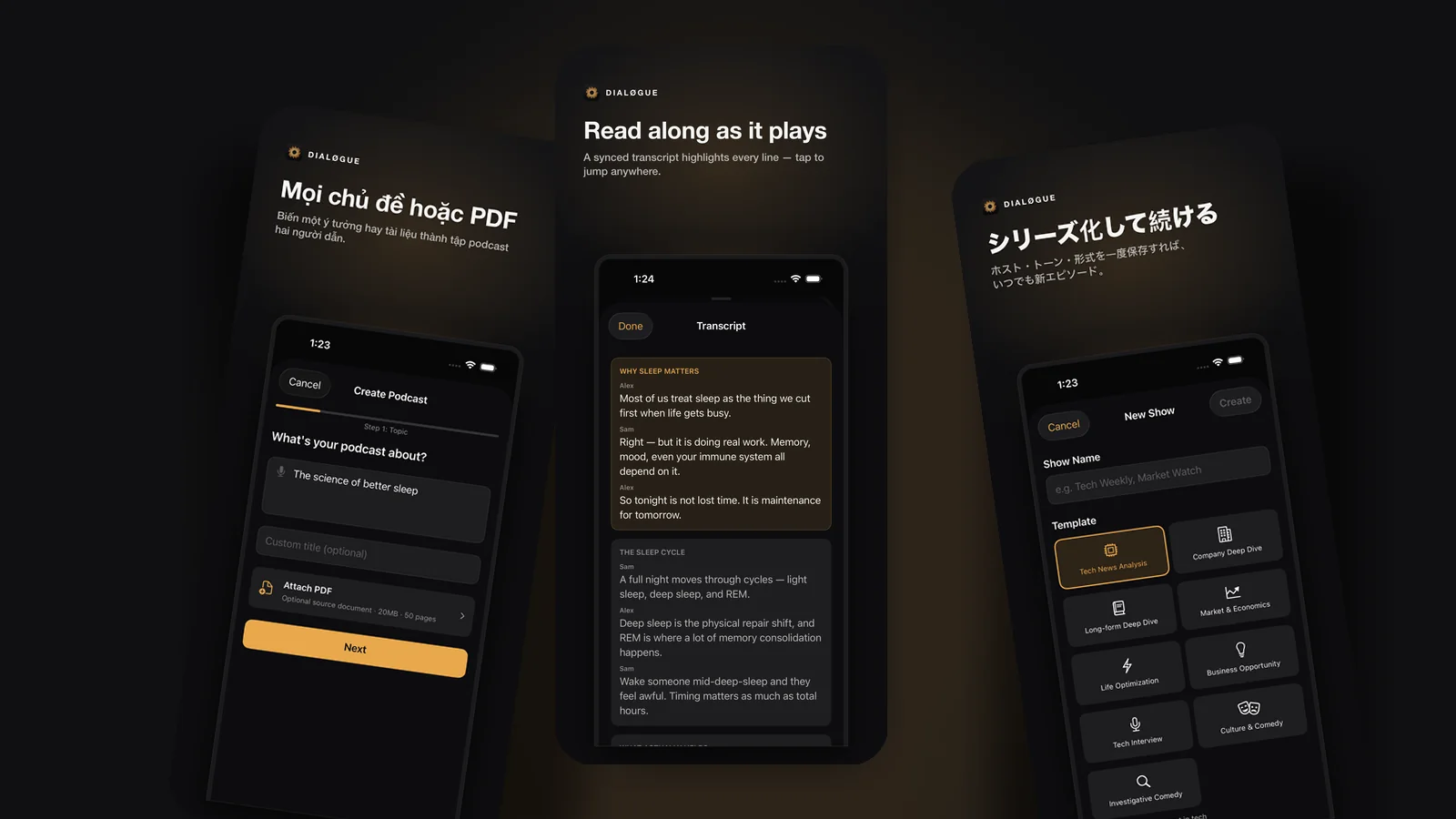
2. Start from one real source asset
Use the actual source material:
- a family guide
- an event PDF
- an orientation packet
- a program summary
If it already exists, upload it as a PDF or use it as the source document for the update.
This matters because bilingual communication gets messy fast when the source itself is not stable.
3. Decide what must stay the same across languages
This is one of the most important steps, and I think teams skip it too often.
Before you generate anything, decide:
- what is the main message?
- what should every listener walk away understanding?
- which details cannot be softened or reframed?
- what can stay in writing instead?
If you are fuzzy here, the bilingual output will be fuzzy too.
4. Review the outline first
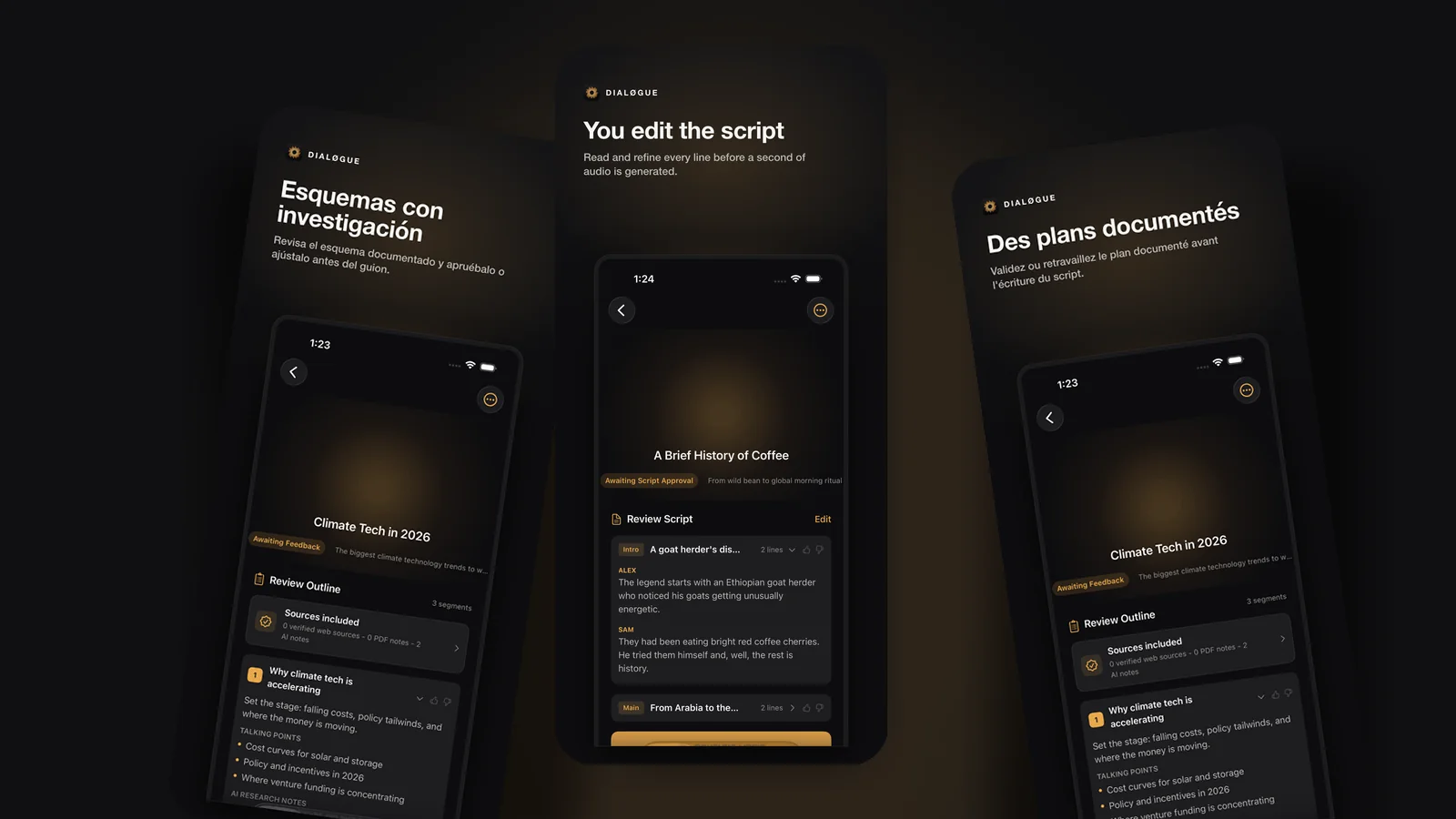
This is where DIALØGUE's workflow becomes useful in a real operational sense.
Review the outline and ask:
- is the update clear in intent?
- are we emphasizing the right things?
- is the structure too long or too generic?
- does this sound like something people would actually listen to?
That review step is what stops the workflow from becoming "AI did some multilingual thing and now we hope for the best."
5. Review the script before voice generation
This is the second control point, and I would not skip it. If you have a family guide or orientation packet ready for a bilingual test, start the workflow here.
It catches the problems that make bilingual communication feel off:
- robotic phrasing
- awkward transitions
- bad emphasis
- wording that is technically correct but socially clumsy
This matters a lot more than people think.
6. Keep the written reference material for precision
I would not use audio as the only format.
I would use audio for:
- explanation
- reminders
- accessibility
- context
And I would keep written material for:
- forms
- exact dates
- links
- sign-up instructions
Simple, yet effective.
Should One Episode Mix Both Languages?
Usually, I would be careful with that.
In some cases, one mixed-language episode can work.
In many cases, it becomes awkward and tiring to follow.
I think the better operational question is not "can one episode include both languages?"
It is:
- should we create parallel language versions for the same update?
- should one audience get English and another get Korean?
- does the audience need full bilingual support or just selective bilingual support?
That is why I think multilingual podcast creation is more about workflow design than language output. For broader context on the multilingual approach, the multilingual podcast creation guide covers the full picture.
Where This Fits in the Cluster
I think of this as the workflow bridge across the Korean side of the cluster.
If your use case is school-based, start with AI podcasts for Korean heritage schools in the U.S..
If your use case is broader community outreach, read AI podcasts for Korean American community organizations.
If you want the Japanese school workflow counterpart, read how to turn Japanese school newsletters into a podcast.
Who Is This Best For?
I think this workflow is strongest for:
- Korean heritage schools
- Korean American community organizations
- local programs with mixed-language family communication
- teams that already create updates but want a more accessible delivery layer
It is especially useful when the communication problem is recurring, not one-off.
When Should You Not Do This?
I would not force bilingual audio when:
- the written version already works perfectly
- the update is too small to justify the workflow
- the team cannot review the content properly
- the audience mostly needs reference material, not explanation
Not every communication problem needs a multilingual audio layer.
My Practical Take
I have seen bilingual communication projects collapse because the team tried to do everything at once. The workload doubles, the quality drops, and three months later someone says "let's just go back to English only."
The version that actually survives is boring: one update type, one review cycle, one audience that genuinely needs both languages. If that works, you add another. If it does not, you stop before anyone burns out.
That is the whole framework. Not exciting. But sustainable.
If your team already has orientation guides, event PDFs, or recurring family updates, start with one source document and test whether the bilingual audio version is actually easier to absorb. For the rest of this cluster, read AI podcasts for Korean heritage schools in the U.S., AI podcasts for Korean American community organizations, how to turn Japanese school newsletters into a podcast, and podcast from PDF.
Written by
Chandler NguyenAd exec turned AI builder. Full-stack engineer behind DIALØGUE and other production AI platforms. 18 years in tech, 4 books, still learning.
Related Articles
Ready to create your own podcast?
Turn any topic or document into a professional podcast — with outline and script review before audio.
Create a Podcast