Creating Podcasts in Multiple Languages: Reach a Global Audience
How to create AI-powered podcasts in 7 languages including English, Japanese, Korean, Spanish, and more. Expand your audience without hiring translators.
Multilingual podcast creation uses AI to generate the same podcast episode in multiple languages from a single input — reaching global audiences without separate production teams or translators. The podcast industry has a language problem. If you create only in English, you are ignoring a very large part of the audience before the first episode even ships.
Why Is Multilingual Podcasting a Huge Opportunity?
Over 60% of podcasts are in English, yet only 17% of the world speaks it. Consider the numbers:
- Spanish — 560 million speakers worldwide
- Chinese — 1.1 billion Mandarin speakers
- Japanese — 125 million speakers, one of the highest podcast adoption rates globally
- Korean — 80 million speakers, with the Korean audio content market growing 30% annually
- Vietnamese — 85 million speakers, rapidly growing internet population
- French — 321 million speakers across 29 countries
Each of these represents an underserved podcast market. The demand for quality audio content in these languages far outstrips supply — especially in education and marketing, where localized content drives significantly higher engagement.
Traditional vs. AI-Powered Multilingual Podcasting
| Factor | Traditional Approach | AI Multilingual |
|---|---|---|
| Languages per episode | 1 (separate production per language) | Up to 7 from a single input |
| Translation time | Days to weeks per language | Minutes — scripts generated natively, not translated |
| Voice consistency | Varies by hired talent per language | Consistent AI voices matched to each language |
| Cost per language | $500–$2,000+ per episode per language | Same flat credit cost regardless of language |
| Quality control | Manual review per language team | Unified outline approval workflow across all languages |
AI podcast generation changes the economics entirely. Instead of hiring native-speaking hosts, translators, and editors for each language, you define your content once and generate in any supported language — with native-quality scripts and language-matched voices.
How Does Multilingual Podcast Creation Work?
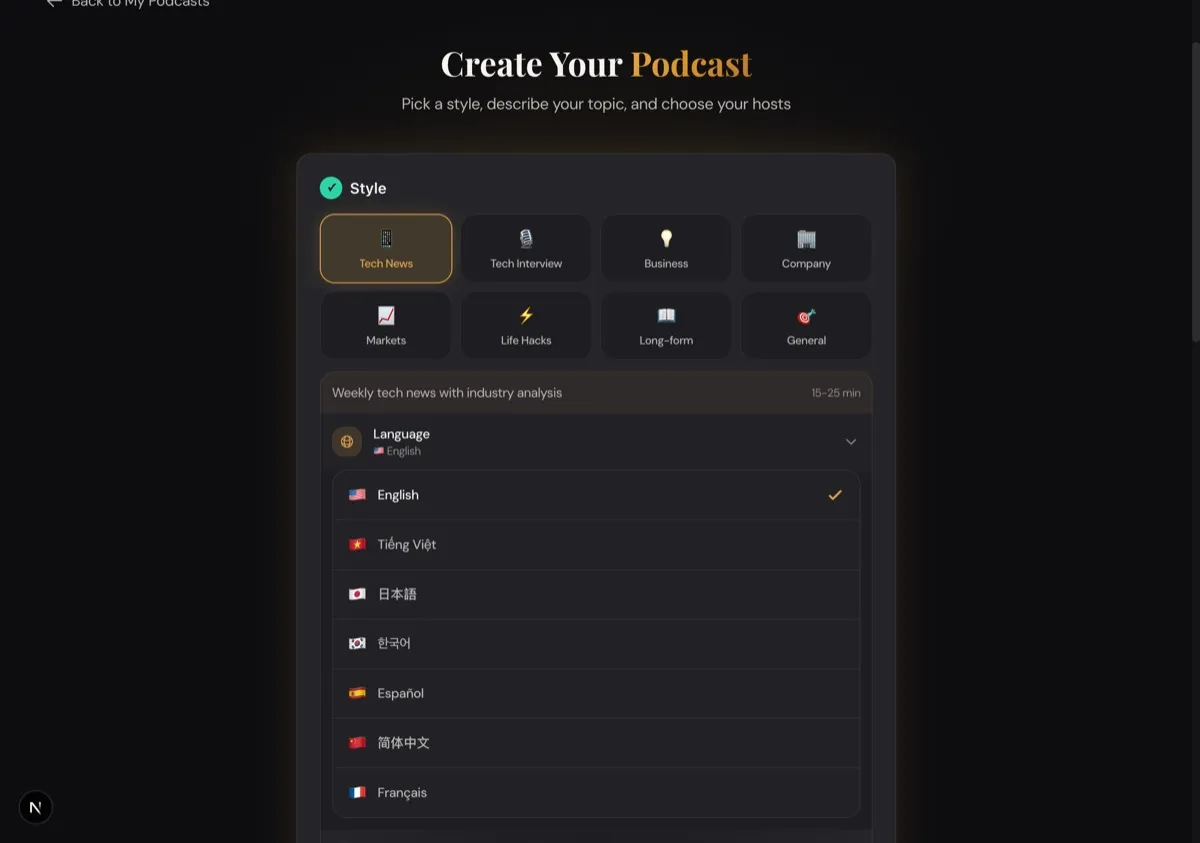
Research Phase
The AI researches your topic using language-appropriate sources. For a technology topic, it might pull from English-language tech publications but present findings in a way that resonates with Japanese or Korean audiences.
Script Generation
This is where multilingual AI podcasting differs most from simple translation. The AI doesn't just translate an English script — it generates a new script in the target language. This means:
- Cultural context — References and examples are appropriate for the target audience
- Natural phrasing — Idioms and conversational patterns match how native speakers actually talk
- Proper structure — Different languages have different rhetorical conventions; the AI adapts accordingly
Voice Synthesis
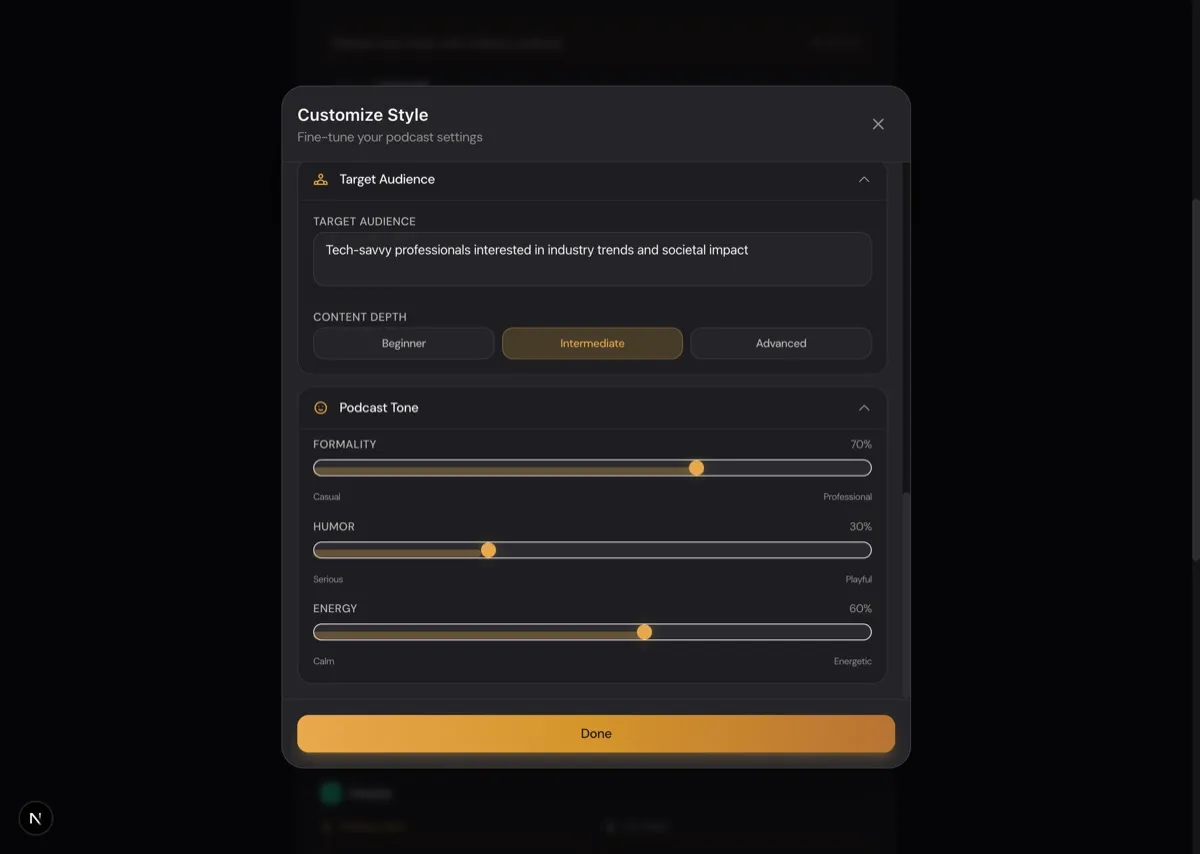
Modern TTS models are trained on native speaker data for each language. The result is pronunciation, rhythm, and intonation that sound natural — not like a foreign speaker reading a script. In DIALØGUE this also connects to language-aware voice preview and accent customization, which is a much more useful workflow than choosing one generic voice and hoping it fits every market.
Reach your global audience today. Create a multilingual podcast in any of 7 supported languages — same content, native-quality audio.
What Are the Best Practices for Multilingual Podcasts?
Start with Your Strongest Market
Don't launch in all 7 languages simultaneously. Start with 2-3 languages where you have the strongest potential audience, learn what works, then expand.
Topic Selection Matters
Some topics are universally interesting (technology trends, health, business). Others are culturally specific. Choose topics that resonate across your target languages.
Review Outlines Per Language
The outline review step becomes even more important with multilingual content. What works as a talking point in English might need adjustment for a Japanese audience. Take advantage of the outline approval workflow to customize per language.
If the script still feels off, the script review step becomes the second safety net before final audio.
Consistent Publishing
If you're publishing in multiple languages, maintain a consistent schedule in each. Listeners in each language should be able to rely on regular episodes, which is easy to maintain with branded podcast strategies.
Use Recurring Shows
Set up separate Studio shows for each language. This lets you customize keywords, templates, and timezones per market while maintaining a unified content strategy.
Language-Specific Tips
Japanese
Japanese audiences value thoroughness and structured information. Educational and analysis templates work particularly well. Pay attention to politeness levels in the script.
Korean
Korean podcast listeners trend younger and prefer conversational, engaging styles. The discussion template with an energetic voice pairs well with Korean content.
Spanish
Remember that Spanish varies significantly between regions. Content targeting Spain differs from content targeting Latin America. Choose your focus market.
Chinese (Mandarin)
Mandarin content benefits from clear structure and practical takeaways. Business and technology templates perform well.
Vietnamese
The Vietnamese podcast market is growing rapidly. Technology and education topics see strong engagement. Consider local context and examples.
French
French listeners appreciate well-researched, analytical content. The analysis and educational templates are strong choices.
Measuring Multilingual Success
Track these metrics per language:
- Download/play counts — Which languages generate the most engagement?
- Completion rates — Are listeners finishing episodes in all languages?
- Growth rate — Which language markets are growing fastest?
- Feedback quality — Are native speakers finding the content natural and valuable?
Getting Started
Creating your first multilingual podcast episode:
- Choose your topic
- Select your template and voice
- Pick your target language from the language selector
- Review the outline (it will be in your target language)
- Generate and publish
The entire process takes about 10 minutes per language. A 3-language content strategy means 30 minutes of work for content that reaches hundreds of millions of potential listeners.
Start reaching global audiences today. Create a multilingual podcast on DIALØGUE — 7 languages, one platform.
Written by
Chandler NguyenAd exec turned AI builder. Full-stack engineer behind DIALØGUE and other production AI platforms. 18 years in tech, 4 books, still learning.
Related Articles
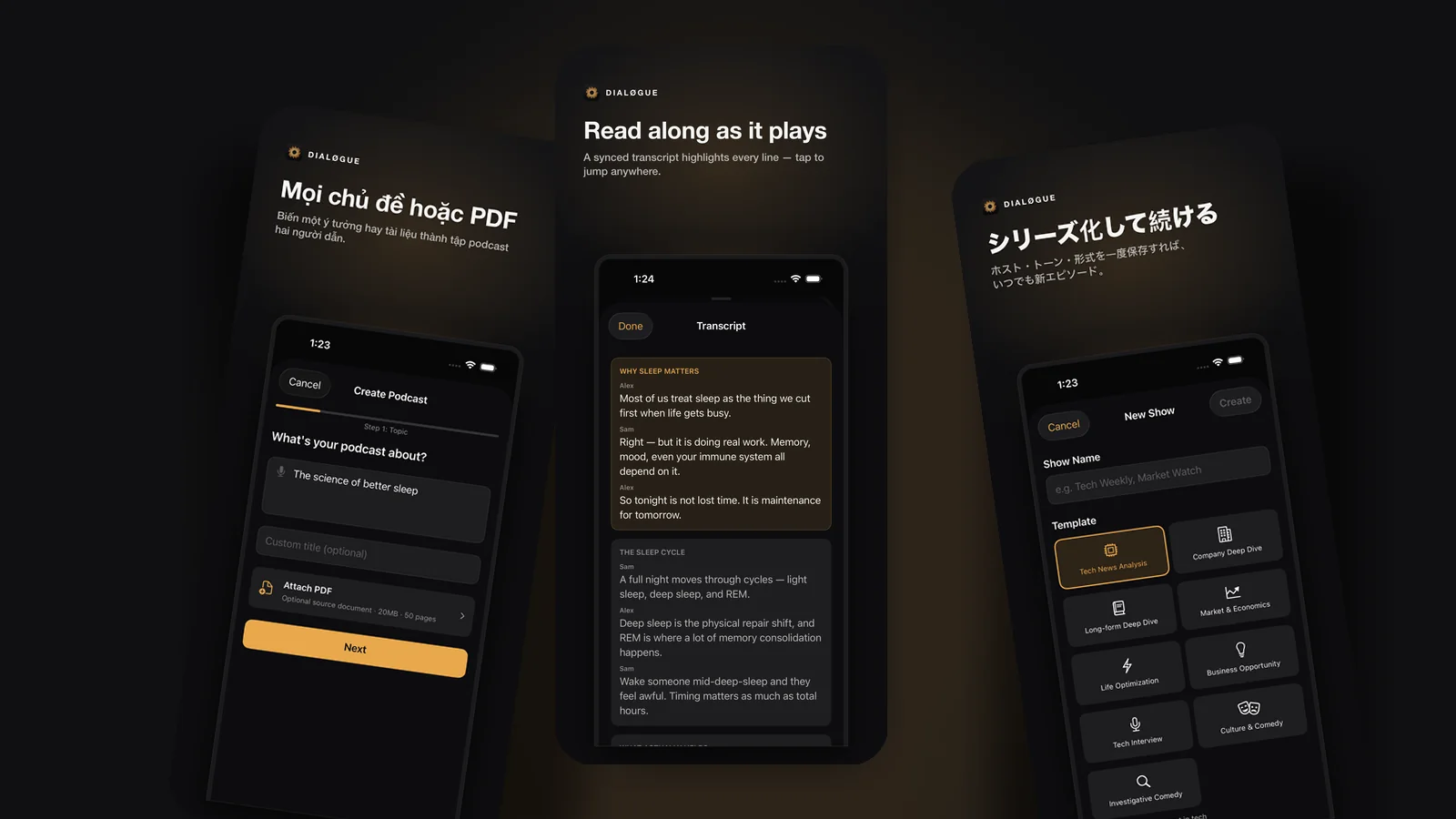


Ready to create your own podcast?
Turn any topic or document into a professional podcast — with outline and script review before audio.
Create a Podcast