AI Podcasts for Japanese Supplementary Schools in the U.S.
How Japanese supplementary schools in the U.S. can turn newsletters and orientation PDFs into audio updates families actually keep up with.
I think Japanese supplementary schools in the U.S. are one of those use cases that sound niche until you look at the actual communication problem.
Then it becomes pretty obvious.
These schools usually do not have a content problem. They already produce a lot:
- newsletters
- parent guides
- orientation packets
- event updates
- handbooks
What they often have is a delivery problem.
Parents are busy. Kids are busy. The school sends another PDF. Everyone means to read it. Not everyone does.
That is why I think AI podcasts can work here. Not because every school needs a podcast. Because some school communication is explanation-heavy, repetitive, and easier to absorb in audio than in another block of text.
Why This Use Case Jumped Out at Me
Schools that already produce structured parent-facing content are the best candidates for AI podcasts — because the hard work of creating the message is already done. The audio version just gives it a second life in a format busy families can actually absorb.
I have spent a lot of my career working across Asia-Pacific markets, and one thing that stays true across a lot of school and community communication is that tone matters almost as much as information.
Not fancy tone. Not "brand voice."
I mean:
- does this feel clear?
- does this feel respectful?
- does this feel organized?
- does this feel trustworthy enough for parents to pay attention?
I am not saying every Japanese supplementary school communicates the same way. They do not. But I do think many of them sit in a communication zone where clarity, structure, and trust matter a lot. Audio can help there if it is done carefully.
What Makes School Communication Work in Audio?
Content that needs explanation — not visual scanning — adapts best to audio. Usually, the best candidates are the things that need explanation, not visual inspection.
| Content type | Why it works in audio |
|---|---|
| Parent newsletters | Easy to review during commutes |
| Orientation guides | Good for framing and recap |
| Event briefings | Helps families understand what matters |
| Policy updates | Better when explained conversationally |
| Curriculum summaries | Gives context beyond the document |
| Principal or coordinator updates | Fits recurring audio well |
Usually weaker fits:
- forms that must be completed exactly
- calendar layouts people need to scan
- highly visual classroom material
So no, I would not turn everything into a podcast. That would be silly.
I would start with the things parents are supposed to understand, not just receive.
Why Not Just Keep Sending PDFs?
PDFs work fine for reference — but they are not great for explanation, context, or repeated understanding. I am not against PDFs. DIALØGUE would not exist if I were against documents :P
The point is that some documents do too much work on their own.
A handbook can be correct and still not be easy to absorb.
A newsletter can be useful and still get buried.
An orientation packet can be important and still feel like homework.
Audio gives schools another format without forcing them to create an entirely separate production process.
That is the part I like. You are not starting from zero. You are repurposing something you already spent time creating.
What Would I Actually Do?
I would keep the workflow extremely simple at the beginning.
1. Start with one existing document
Use the actual school material, not a rewritten summary from memory.
That could be:
- a parent handbook
- an orientation packet
- a monthly newsletter
- an event guide
If the school already has the file, upload it as a PDF. That is both faster and safer than trying to recreate the content from scratch.
2. Review the outline before doing anything else
This is one reason I think DIALØGUE fits this use case better than a generic text-to-speech tool.
The outline review lets the school check:
- are we emphasizing the right things?
- are we missing anything parents actually care about?
- does this feel too long, too vague, or too robotic?
For school communication, this step matters a lot. You want control before the episode turns into final audio.
3. Review the script before voice generation
This is the second safety check. If you want to test this with one document right now, start here — you can review both the outline and the script before anything becomes final audio.
I like this step because it catches the problems that make a piece technically correct but practically unhelpful:
- awkward wording
- bad emphasis
- school-specific terms handled poorly
- dates or expectations phrased unclearly
This is where the workflow stops being "AI novelty" and starts becoming something a real organization could use repeatedly.
4. Generate the audio only after the message feels right
Then the school can publish:
- a parent update
- an orientation episode
- an event explainer
- a recurring monthly briefing
Simple, yet effective. That is usually my favorite category of workflow.
Who Is This Best For?
I think this is strongest for:
- Japanese supplementary schools already sending regular parent communications
- coordinators who keep rewriting the same contextual explanations
- programs with handbook-style PDFs that families do not always finish
- schools that want a more human delivery layer without hiring a production team
The big advantage is not "wow, AI made a podcast."
The big advantage is that the school can turn existing communication into something families might actually consume.
When Does This Become a Bad Idea?
There are definitely cases where I would not push this.
I would be cautious when the communication depends heavily on:
- exact visual layout
- forms and signatures
- tables that need quick scanning
- classroom materials where seeing the page matters more than hearing the explanation
In those cases, audio is better as a companion summary, not the main format.
Why Does Language Flexibility Matter?
For Japanese supplementary schools in the U.S., the communication reality is often more multilingual than any single document suggests. Even if the school primarily communicates in Japanese, the reality in the U.S. is often more mixed than the document itself suggests.
Parents, guardians, volunteers, and surrounding community context are not always operating in one language all the time.
That does not mean every school should suddenly launch a seven-language media operation. Please do not do that because of one blog post.
It does mean flexibility matters.
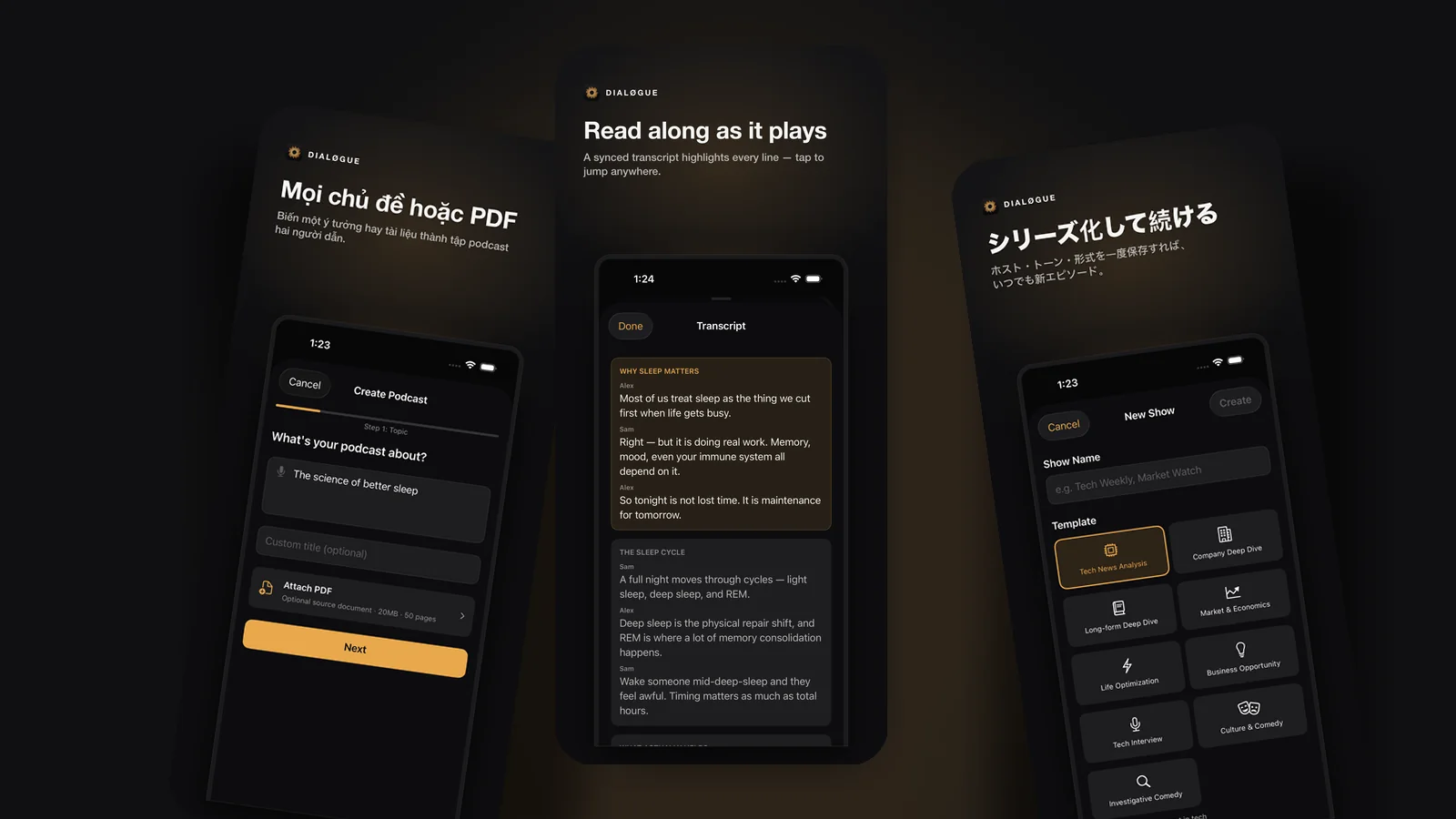
DIALØGUE supports multilingual podcast creation, and I think that matters here because the workflow can evolve without the school rebuilding everything from scratch. If you want the broader context on how AI podcasts work for education, that post covers the wider use case.
Where This Fits in the Cluster
I think of this as the entry point for the school side of the cluster.
If you want the tactical workflow, read how to turn Japanese school newsletters into a podcast.
If you want the Korean school version of the same problem, read AI podcasts for Korean heritage schools in the U.S..
If you know the real issue is bilingual communication, go straight to how to create bilingual English-Korean audio updates.
My Short Version
I like this use case because it is grounded in a real communication pain point.
The school already has:
- the content
- the audience
- the reason to communicate regularly
What it may not have is a format that fits busy family life.
That is where AI podcasts can help.
Not as a gimmick. Not as a replacement for every document. As a lighter, more human way to explain the parts that people are supposed to understand, not just receive.
If your school already has newsletters, handbooks, or parent-facing PDFs, start with one document and test whether the audio version is easier for families to keep up with. For the next step in this cluster, read how to turn Japanese school newsletters into a podcast, AI podcasts for Korean heritage schools in the U.S., how to create bilingual English-Korean audio updates, and podcast from PDF.
Written by
Chandler NguyenAd exec turned AI builder. Full-stack engineer behind DIALØGUE and other production AI platforms. 18 years in tech, 4 books, still learning.
Related Articles
Ready to create your own podcast?
Turn any topic or document into a professional podcast — with outline and script review before audio.
Create a Podcast