How to Turn Japanese Announcements Into Podcasts People Actually Hear
A practical guide to turning Japanese school notices, PTA updates, and company announcements into natural audio without making them sound translated.
Japanese announcements can become useful podcasts, but only if the workflow treats them as Japanese communication first and audio content second. A school newsletter, PTA notice, or company update is usually written to be scanned. A podcast has to be heard in sequence.
That is why a simple read-aloud version often feels wrong.
The words may be correct. The rhythm is not.
What Kind of Announcement Works?
This workflow is a good fit for announcements that people should understand, not just archive:
- school newsletters
- PTA notices
- community organization updates
- company briefings
- event reminders
- policy changes
- weekly summaries
The common problem is not that the information is unimportant. It is that the format asks busy people to stop and read.
Audio gives the announcement another chance.
The Japanese-Specific Challenge
Japanese written announcements often compress a lot of meaning into polite, compact phrasing. That works on a page.
In audio, it can become heavy.
A natural Japanese podcast version usually needs:
- shorter sentences
- clearer transitions
- fewer stacked nouns
- less document-like formality
- a more obvious listening order
The goal is not casual speech for everything. The goal is a tone that sounds like someone helpfully explaining the notice, not mechanically reading it.
Start With the Listener, Not the Document
Before generating anything, decide who the listener is.
For a school notice, the listener might be a parent driving home.
For a company announcement, it might be an employee catching up before a meeting.
For a community group, it might be someone who wants the key dates without opening a PDF.
That listener determines the structure.
A Better Episode Structure
Instead of following the announcement exactly, use a listening-first structure:
- What changed or what is happening?
- Who needs to pay attention?
- What dates or actions matter?
- What background helps people understand?
- What should the listener do next?
This structure is simple, but it solves most of the problem. It moves the episode from "written notice" to "useful briefing."
Voice and Tone Matter More in Japanese
Japanese audio quality is not just pronunciation.
Tone matters. Sentence endings matter. Formality matters.
For most announcements, I would start with polite です/ます form. Avoid overly heavy keigo unless the audience expects it. For school and community content, clarity beats ceremony.
The voice pairing should also have roles:
- one host anchors the information
- the other asks practical follow-up questions
That second voice is useful because it can turn dense announcement language into natural listener questions.
What to Review Before Audio
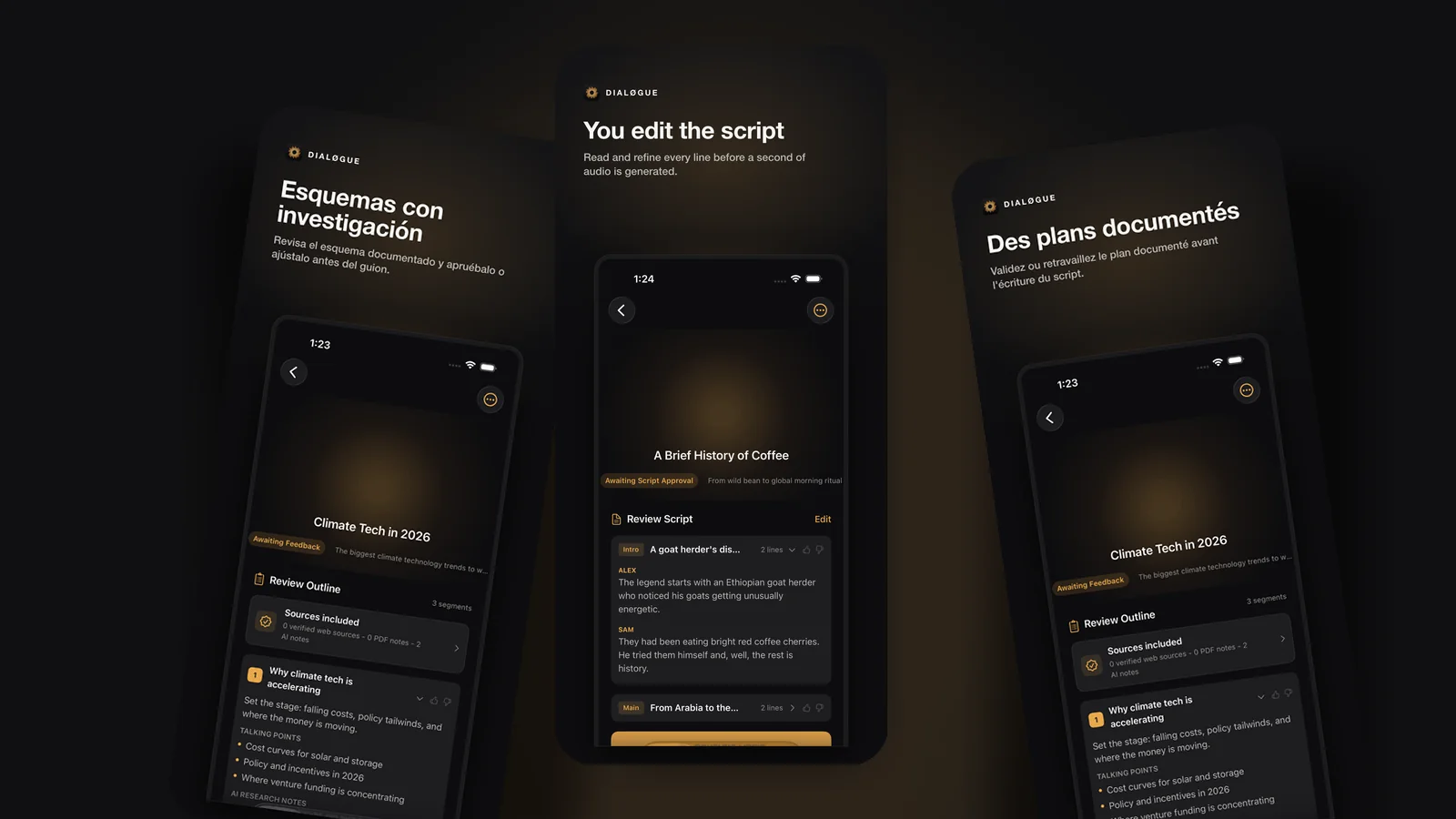
Before generating final audio, review the outline and script for three issues:
- Does it sound like Japanese written for listening?
- Are dates, names, and actions easy to catch?
- Does any section feel like a direct translation?
The third point is the dangerous one. If the Japanese sounds like translated English, listeners will feel the friction immediately.
This is why localization matters. For broader context, see Can You Create a Podcast in Multiple Languages?.
Where Free Audio Summaries Break Down
NotebookLM or another free summary tool can be useful for a private first pass. If you only need to understand a Japanese notice quickly, start there.
The problems appear when the audio is meant for other people.
Japanese announcements often need small but important editorial decisions:
- whether the tone should be plain です/ます, heavier keigo, or more conversational
- which host should carry the formal information and which should ask practical follow-up questions
- how dates, locations, deadlines, and required actions are repeated so listeners catch them
- whether sensitive school, PTA, or company details should be reviewed before publishing
- whether English and Japanese listeners need separate versions instead of one translated script
A quick free summary may be enough for comprehension. DIALØGUE should earn the workflow when you need reviewable Japanese audio that can be shared without sounding translated or careless.
English and Japanese Versions Should Not Be Identical
If you need both languages, do not force one script to carry both audiences.
Make separate versions:
- same message
- same facts
- different phrasing
- different pacing
- different listener assumptions
That is more work than clicking translate, but it is also the difference between usable audio and awkward audio.
Where I Would Start
Start with one announcement people regularly miss.
Not the most important document in the organization. Not a complex legal update. Pick something common:
- next month’s schedule
- a school event reminder
- a member update
- a short internal briefing
Turn that into a short episode and judge it honestly. If the audio helps people understand the notice faster, you have a real workflow.
If you have a Japanese announcement people should actually hear, create a podcast and review the outline before generating audio. The outline will tell you quickly whether the notice can become a useful listening experience.
Written by
Chandler NguyenAd exec turned AI builder. Full-stack engineer behind DIALØGUE and other production AI platforms. 18 years in tech, 4 books, still learning.
Related Articles
Ready to create your own podcast?
Turn any topic or document into a professional podcast — with outline and script review before audio.
Create a Podcast