How DIALØGUE Handles Opinion, Comedy, and Thin-Source Podcast Topics
DIALØGUE supports factual, subjective, opinion, comedy, and fictional podcast topics by giving users context and review control instead of acting as the arbiter of truth.
Not every podcast topic is a breaking-news explainer with five perfect public sources.
Some topics are subjective. Some are cultural. Some are funny. Some are fictional. Some are based on private documents, personal notes, or a point of view the creator wants to explore.
DIALØGUE should not be the arbiter of truth. Its job is to show useful context, make uncertainty visible, and give the user control before audio is generated.
Different topics need different evidence
For a factual news or business topic, public sources matter. For a comedy episode, fictional story, opinion show, or internal training podcast, the right question is different: is the episode clear about its premise, tone, and source basis?
That is why DIALØGUE supports topic, PDF, and topic-plus-source workflows. A creator may want a grounded briefing, a discussion built from their own document, or a more expressive show format.
Reviewable warnings are better than silent failure
When public sources are thin or mixed, the better product behavior is not always to fail the episode. Often the better behavior is to show the limitation and ask the user what they want to do.
That can mean:
- continue with a clearly framed draft
- add a PDF or source document
- revise the topic
- choose a more opinion-forward or comedy-oriented format
Why the review steps matter
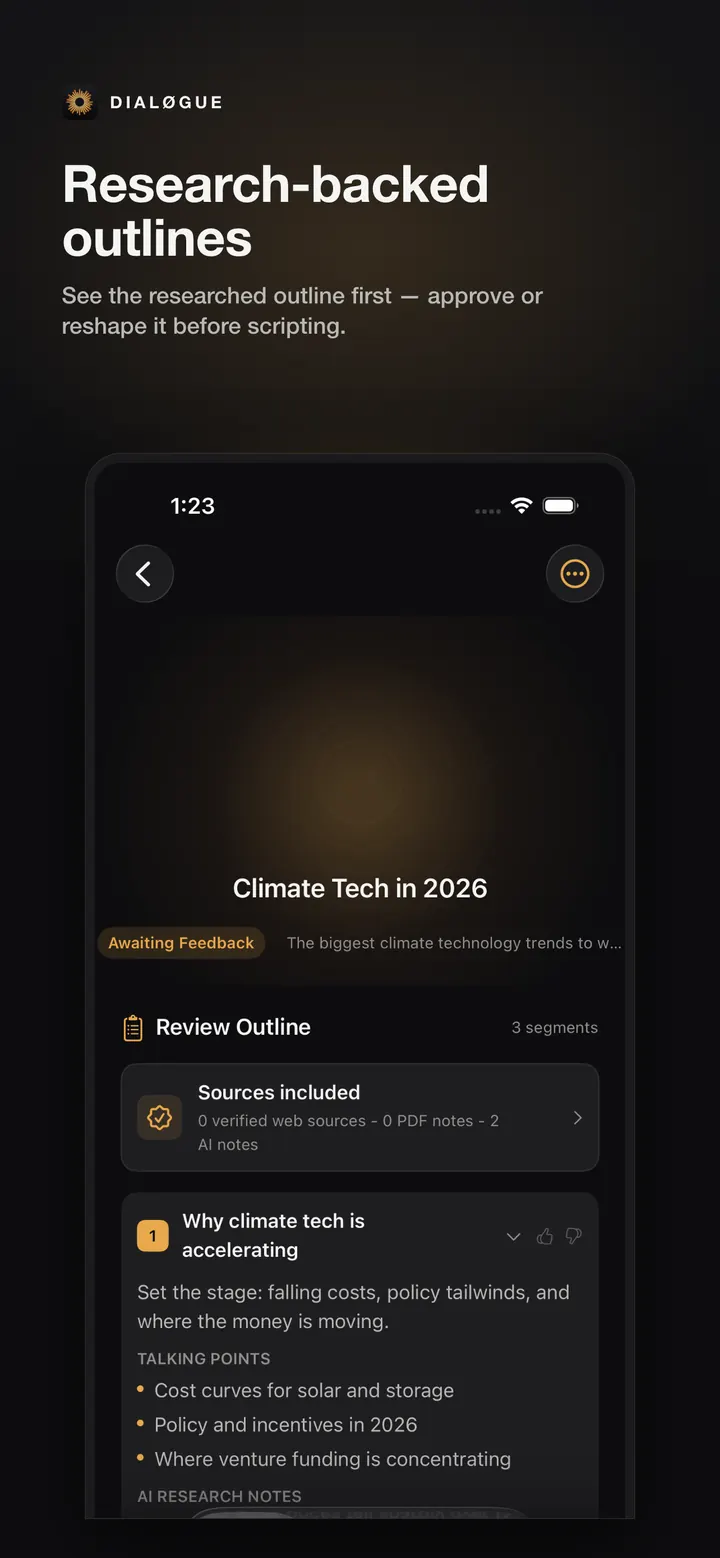
DIALØGUE has two major user-control points before audio:
- Outline review: check the angle, structure, and source context.
- Script review: check wording, tone, pacing, and whether the episode matches your intent.
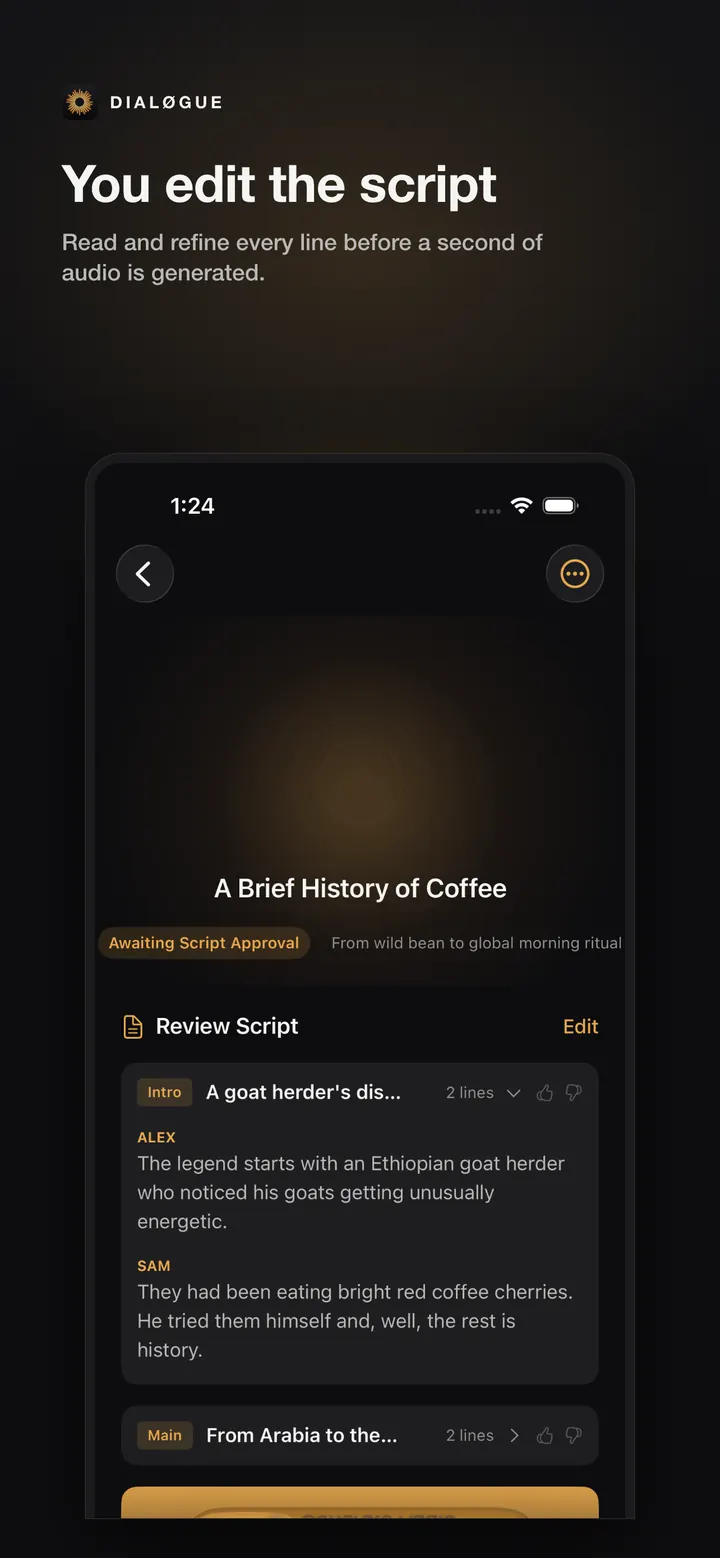
These steps are important because truth can be contextual. A market analysis, cultural commentary episode, fictional story, and comedy segment should not be judged by the same source checklist.
Good AI podcast generation is a collaboration
The model can draft. The app can surface sources, warnings, and structure. But the creator decides whether the episode is the right one to publish.
That is the direction DIALØGUE is moving toward: less automatic failure, more informed user choice, and clearer review moments before anything becomes audio.
Written by
Chandler NguyenAd exec turned AI builder. Full-stack engineer behind DIALØGUE and other production AI platforms. 18 years in tech, 4 books, still learning.
Related Articles

Ready to create your own podcast?
Turn any topic or document into a professional podcast — with outline and script review before audio.
Create a Podcast