Company Newsletter to Podcast: A Better Way to Share Internal Updates
How internal communications teams can turn newsletters into short audio episodes that employees can actually consume between meetings.
The useful version of this workflow is not “turn everything into audio.” It is “turn the right source into an episode someone can finish.” For internal communications and people teams, that distinction matters because the source material usually already exists. The hard part is making it clear enough to listen to.
DIALØGUE is strongest when you bring real material: monthly newsletters, people updates, leadership notes, and team announcements. The product should not replace judgment. It should reduce the production burden around research, outlining, scripting, voices, and review.
When this workflow makes sense
Use this when the goal is to turn scattered announcements into a calm audio briefing employees can finish. Audio is useful when the listener needs a guided path through material they might otherwise skip, skim, or postpone.
It works best when the source has:
- one clear audience
- a useful point of view
- enough context to explain the topic out loud
- sections that can become a listening sequence
- a reviewer who knows what should not be published
That last point is important. AI podcast generation is not a magic publishing button. It is a faster way to get to a draft that still deserves editorial review. For a broader view of internal audio updates, see AI podcasts for internal communications.
What DIALØGUE should do with the source
The first job is structure. A document, memo, or update is often written for scanning. A podcast is experienced in order. That means the episode needs to start with why the listener should care, then move through the supporting context in a clean sequence.
In practice, I would expect the outline to do three things:
- remove material that is only useful on the page
- group related points into listener-friendly segments
- make the ending clear enough that the listener knows what to remember
This is where DIALØGUE is different from simple text-to-speech. Reading the source aloud is easy. Making it listenable is the product work.
What to review before audio
Before approving the outline or script, check:
- does the opening say what changed this week or month
- are HR items separated from product and customer updates
- are action items obvious
- is the tone human rather than corporate
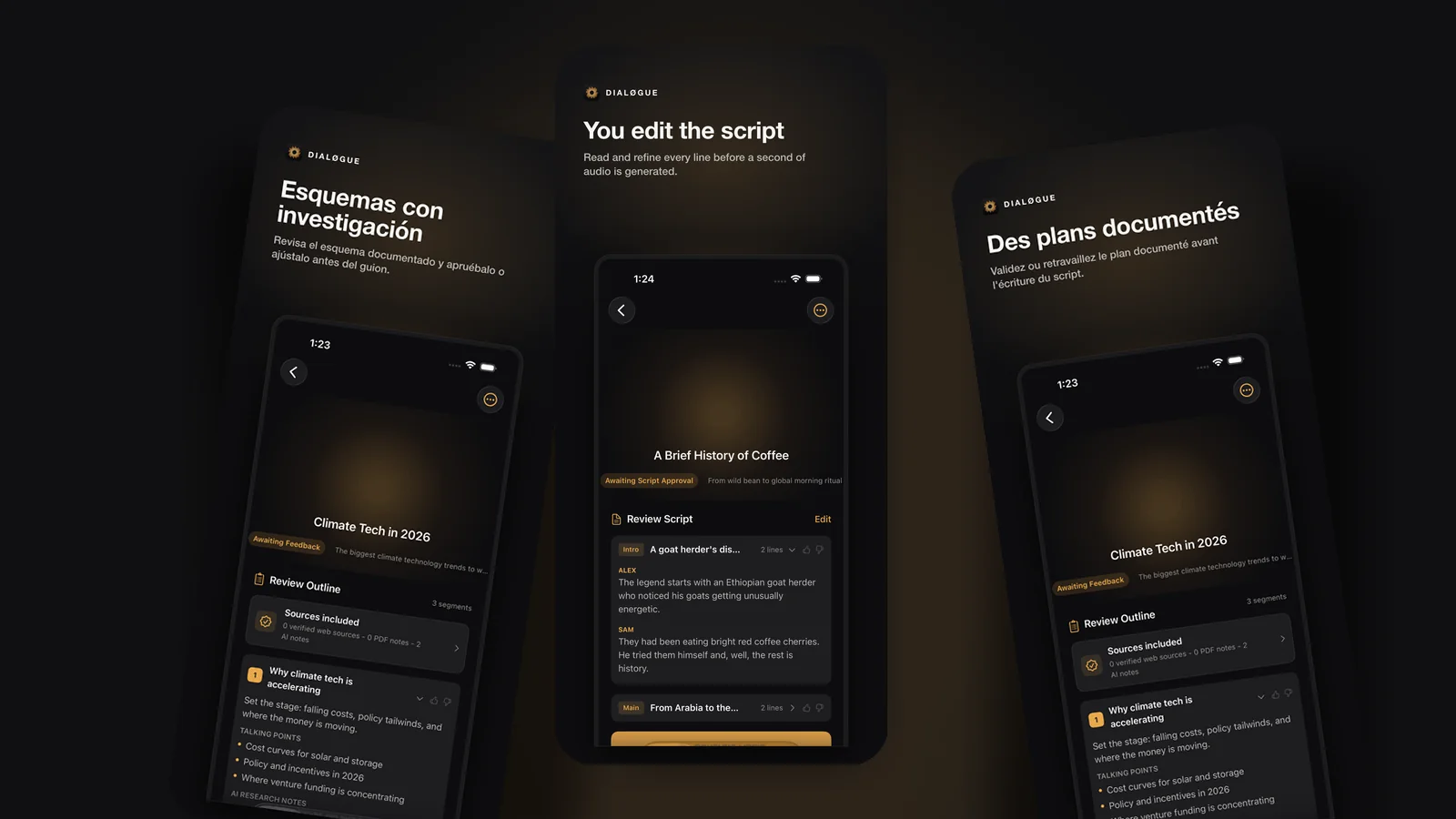
If one of those checks fails, submit feedback before generating audio. The cheapest time to fix an episode is before the final voices are created.
Where free summaries and readaloud tools fall short
A free summary can be enough when you only need a private understanding of a document. A basic TTS readaloud can be enough when exact wording matters more than experience.
But internal communications usually needs more than that. It needs a structure the listener can follow, a spoken script that does not sound copied from a page, and enough review control to avoid publishing something embarrassing.
That is the reason to use DIALØGUE instead of treating audio as a file conversion step. The value is not just output. The value is the editorial path from source to outline to script to final episode.
A practical first test
Do not begin with your most sensitive or complex material. Pick one source where you already know what a good episode should say. Then test one newsletter and remove anything that should stay private before audio generation.
After the first draft, ask four questions:
- Would I share this with the intended listener?
- Did the outline choose the right structure?
- Did the script sound spoken rather than written?
- Did the process save enough time to repeat?
If the answer is yes, you have more than a demo. You have the beginning of a repeatable audio workflow.
If you want to test this honestly, create a podcast from one real source. The point is not to generate more audio. The point is to find out whether your existing material can become something people will actually hear.
Written by
Chandler NguyenAd exec turned AI builder. Full-stack engineer behind DIALØGUE and other production AI platforms. 18 years in tech, 4 books, still learning.
Related Articles


Ready to create your own podcast?
Turn any topic or document into a professional podcast — with outline and script review before audio.
Create a Podcast